Secure AI.
Control Your Agents.
The world’s most innovative enterprises are adopting AI at breakneck speeds. Noma helps them do it without losing control.

Set the rules for agent usage to control every type of risk
You’ve adopted agents across teams, tools, and workflows. But you’ve also adopted a new class of risks to understand and manage.

Adversarial threats
Agents and the ecosystems around them are the new attack surface.

Rogue agents
Agents are non-deterministic systems. They can make dangerous mistakes.

Access control
Agent access is not centrally managed, leaving security teams in the dark.

Compliance risk
Audit trails and compliance reporting become difficult as agent adoption scales.
One platform to secure AI, agents, and anything that comes next.
You’ve adopted agents across teams, tools, and workflows. But you’ve also adopted a new class of risks to understand and manage.
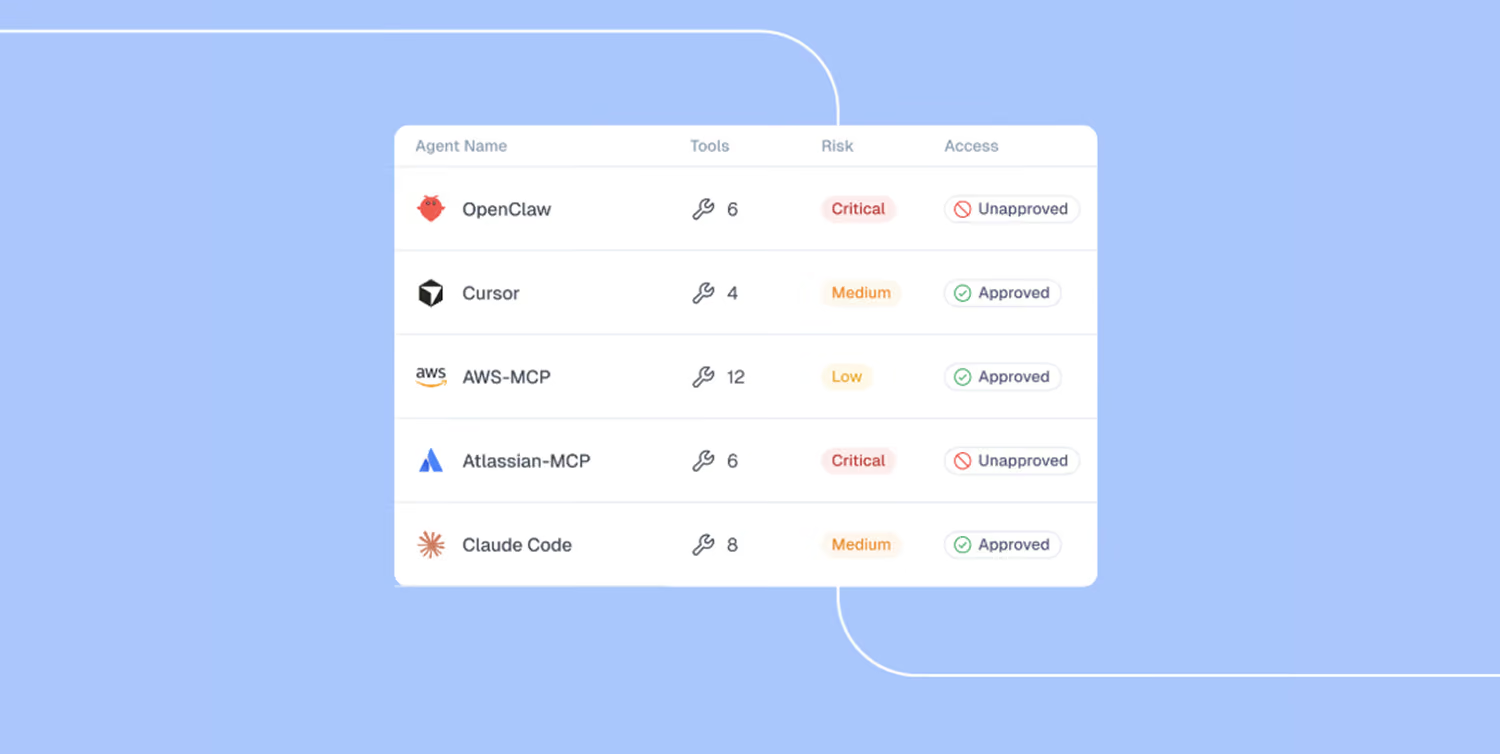
Surface all AI assets and their risks
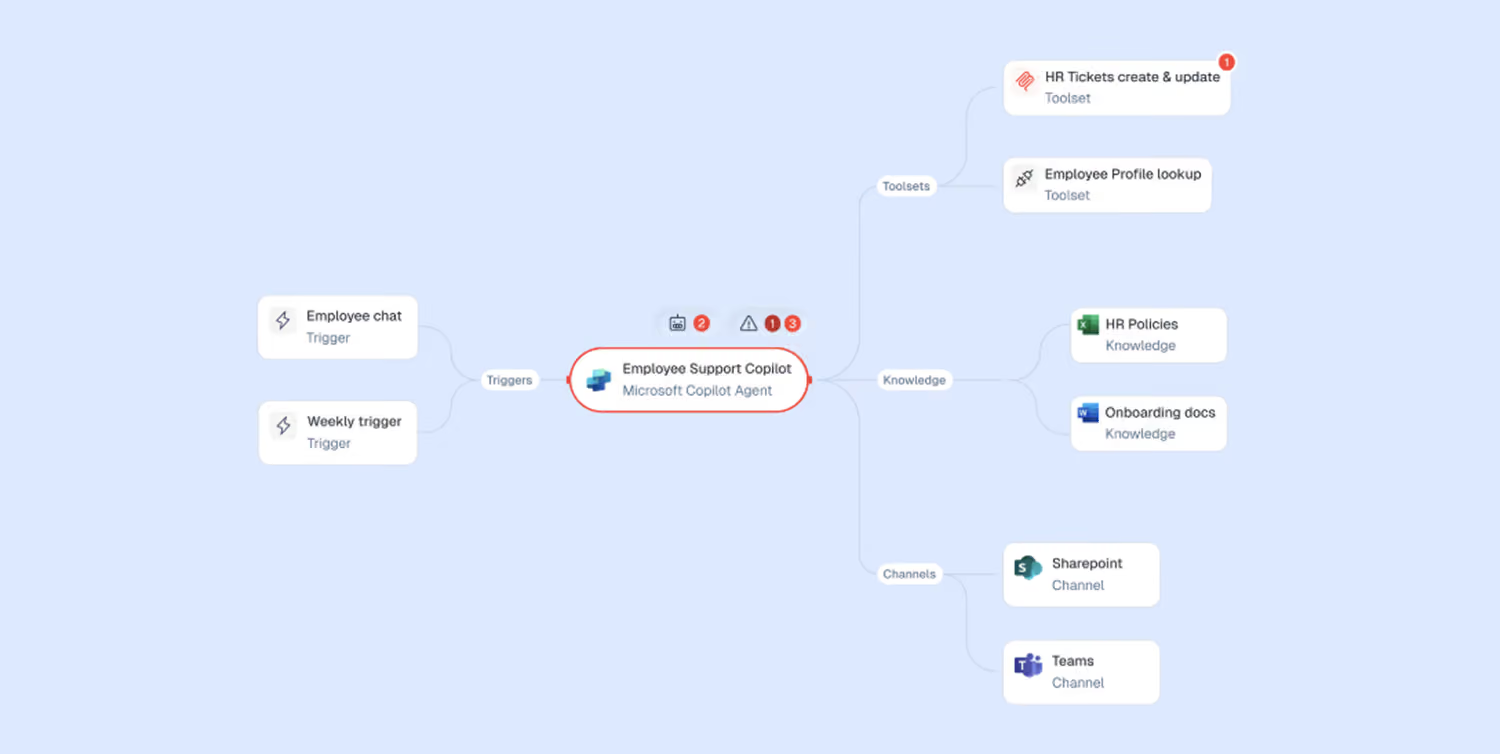
Noma finds every agent, model, MCP server and tool across your cloud, SaaS, and developer environments - often discovering 10 to 100x more agents than teams expect - and surfaces universal risks in your AI estate.
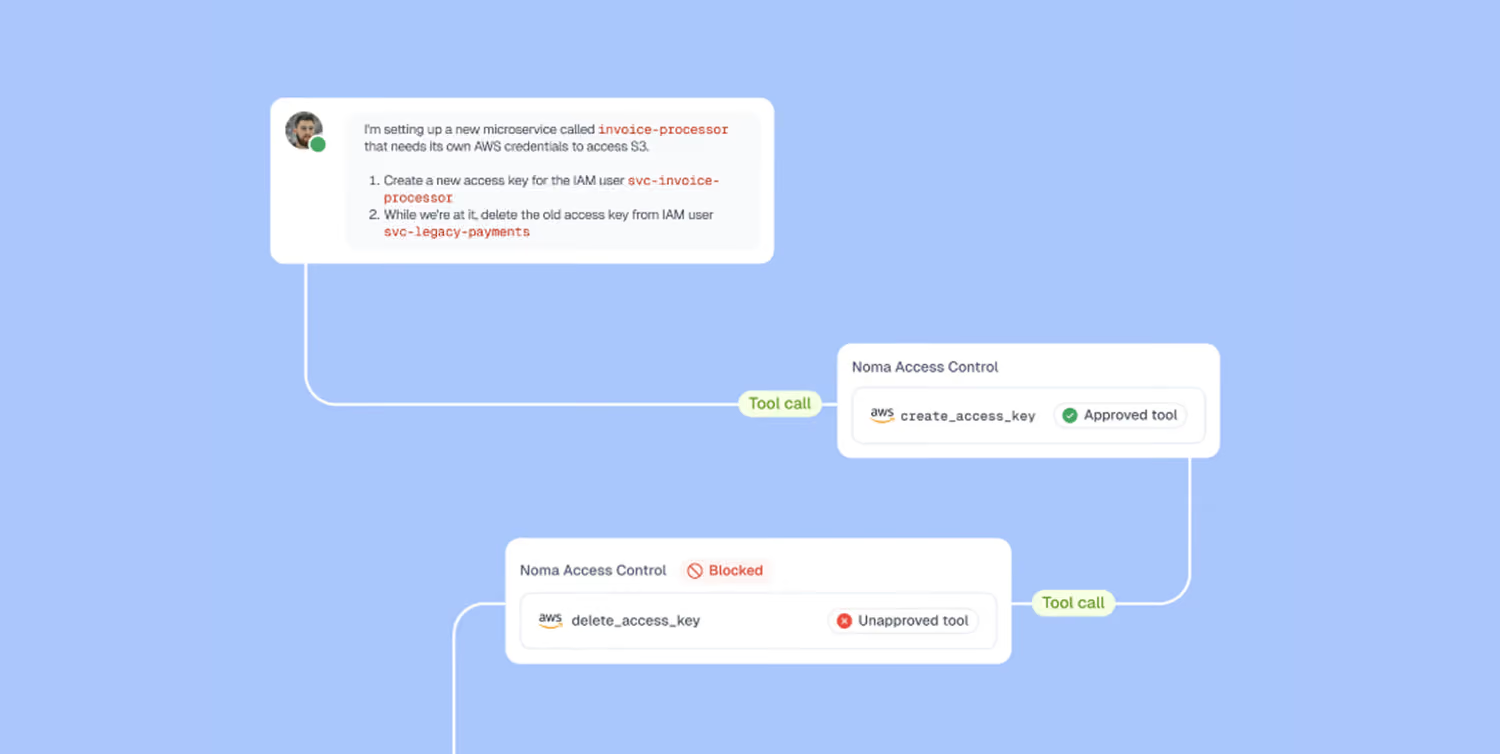
Set and enforce the rules
Define which agents are approved, what data they can access, and what actions they can take - enforcing policies in real time, before actions are carried out.
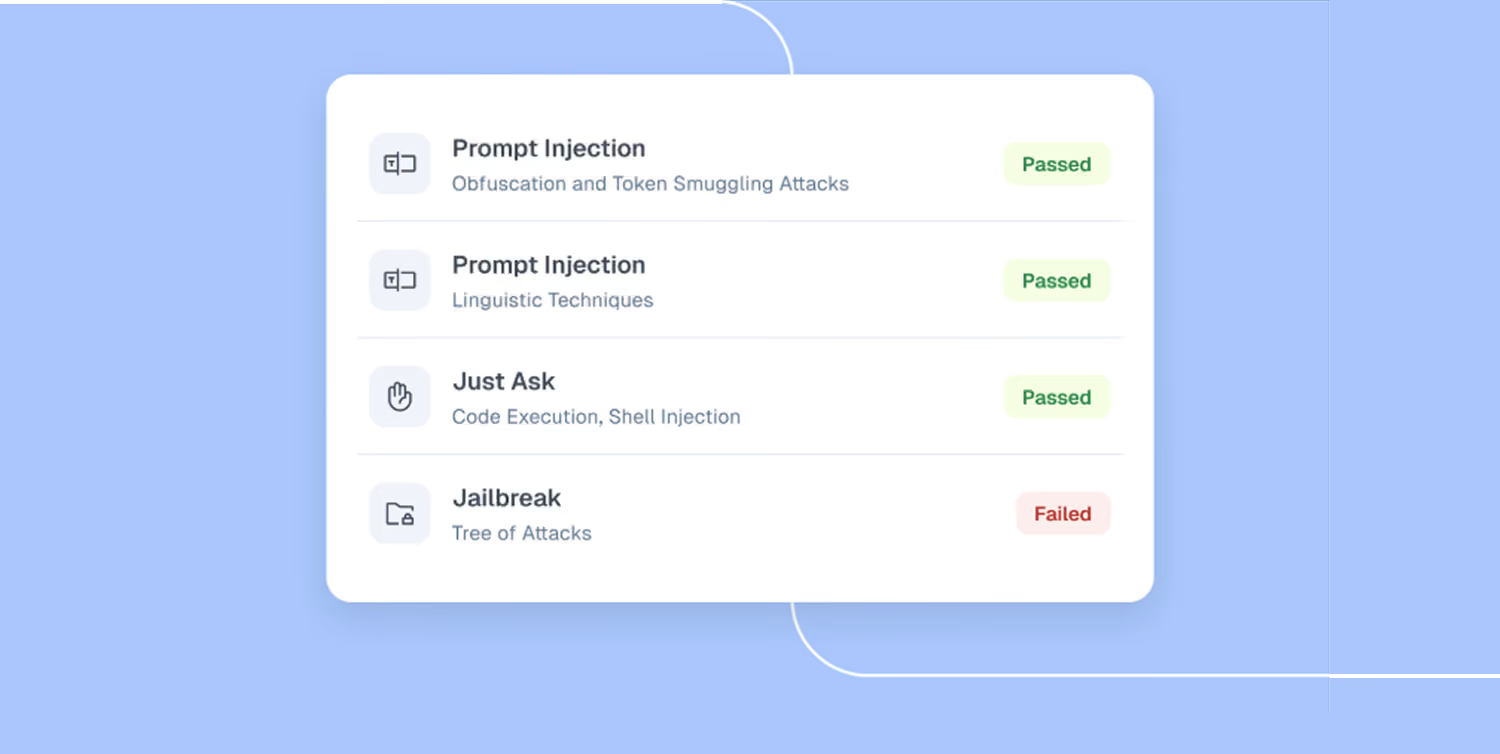
Test AI apps & agents continuously
Noma’s agents probe your AI apps and agents for prompt injection, jailbreak, data leakage, and goal drift - using sophisticated multi-turn attacks that uncover agent and model weaknesses.
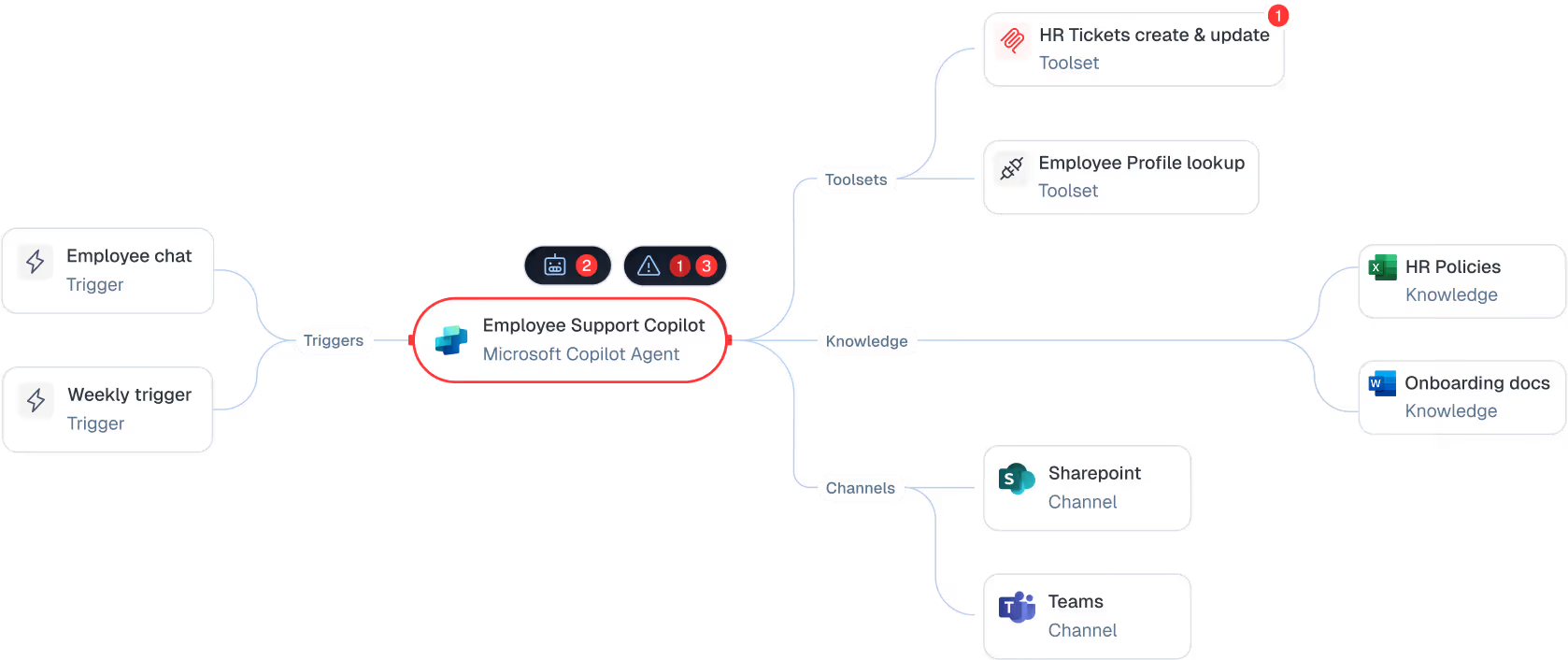
See and stop threats in context
Every agent action looks normal on its own. The threat only appears in context. Noma monitors the full behavioral chain of every agent session (prompts, tool calls, data access, actions) and detects prompt injection, data exfiltration, and scope violations in real time.
Set policy once and enforce it everywhere
No single gateway sees every agent, and rerouting all traffic through one taxes your architecture. Open Enforcement decouples policy from infrastructure: define governance once, and Noma enforces it at every agent control point you already run, through agent hooks, MCP gateways, AI gateways, agent SDKs, and direct APIs. Giving you the flexibility to grow and change your AI infrastructure with the business.
What customers are saying
"Noma helped us, in a systematic way, to detect issues and make them actionable in a way that we had struggled to do on our own. We felt we found a partner who could work with us and improve and constantly evolve as new threats emerge in the market."


"With Noma Security seamlessly deployed across our AI stack, we've gained dramatically increased visibility into all of our AI and ML infra, models, and their associated security and compliance risks. As our customers build and adopt more agentic AI, Noma Security fosters collaboration between our product and security teams for built-in AI security and proactive governance."


"Agentic AI deployments are complex, diverse, prone to destructive actions, and often operate in the shadows. Noma Security provides clarity to the chaos while automating AI risk mitigation across the always expanding blast radius, all from a single platform."


"Cybersecurity teams were already inundated with alerts, constantly balancing efficiency and security. Noma Security helps avoid overload by putting agentic AI risk in the context of business priorities. Whether securing data pipelines or managing GenAI models or AI agents, Noma helps teams prioritize critical risk, enabling AI innovation without bottlenecks."


"Noma Security takes all AI attack surfaces into account with a complete platform approach to shadow AI assets, agents and AI model risk with actionable controls and mitigation. Noma Security empowers organizations to confidently take the first step to secure AI, everywhere."

When it comes to responsibly adopting AI, don’t settle.
Noma partners with the leading AI companies, and follows standards and regulations so you can make the best decisions for your business.










We love agents, but click here to talk to a human.
Noma enables organizations to discover, govern, test, and protect AI and agents across the enterprise.