






How Noma MCP server security works
Discover approved and shadow MCP servers
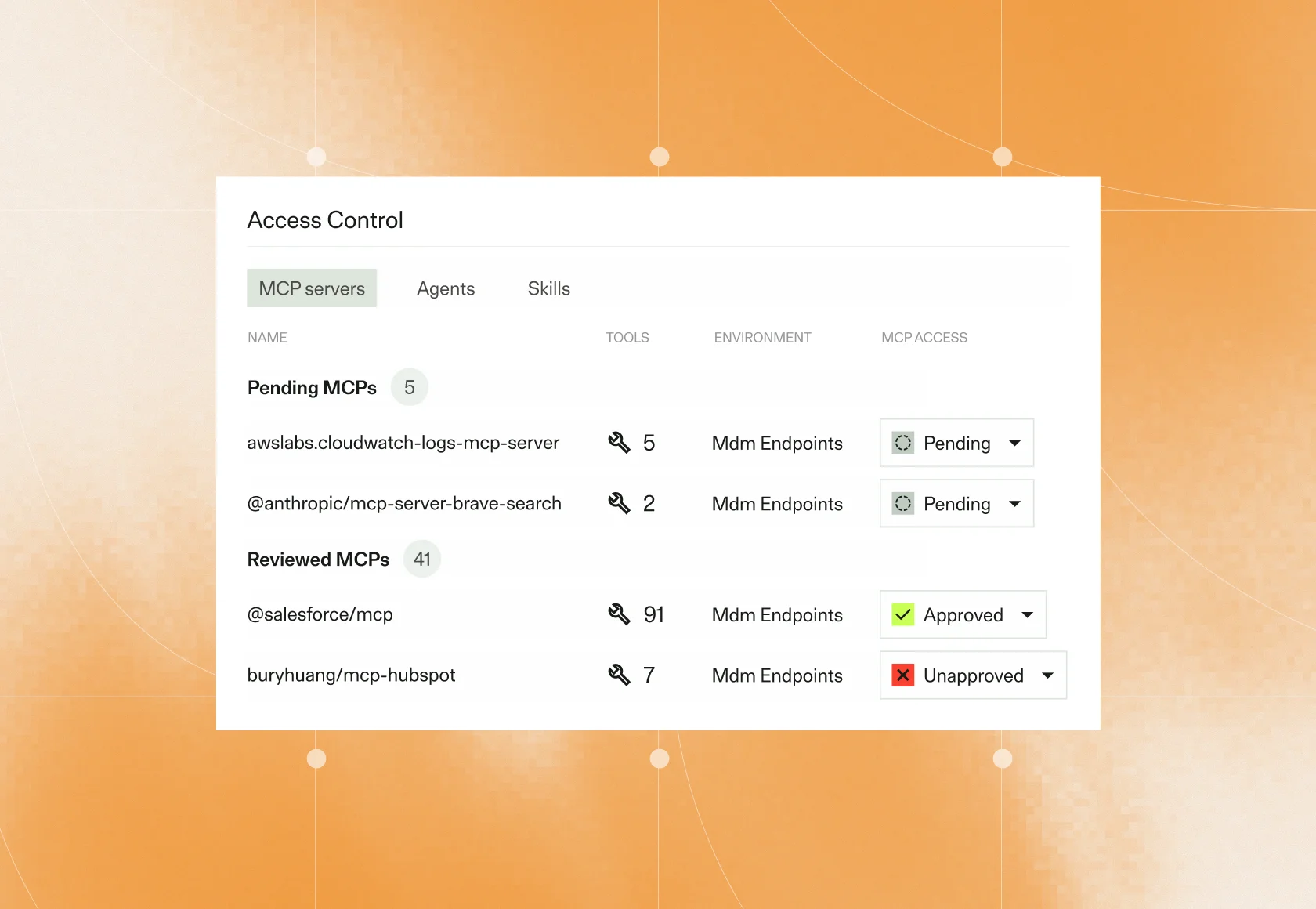
See which MCP servers are installed, which agents use them, and which tools they expose. Noma surfaces unapproved servers alongside approved ones.
Assess MCP supply chain risks

Find unpinned packages, excessive permissions, exposed secrets and more. Noma also flags combinations of risks that increase exposure.
MCP registry and access control
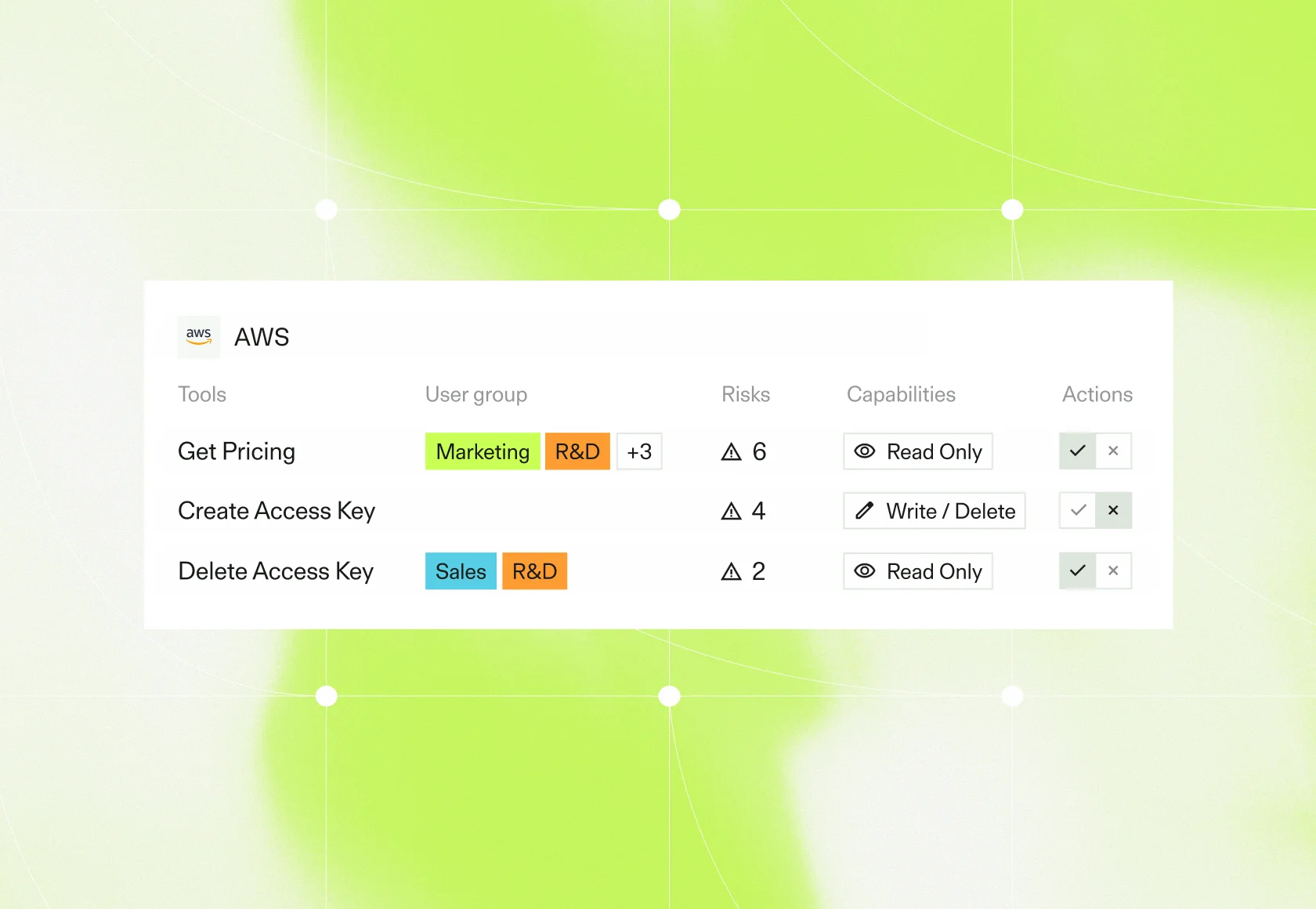
Approve, review, or block MCP servers. Restrict individual tools within approved servers and enforce those decisions when agents attempt to connect or act. Policies are based on identity, so agents with different owners can have different levels of access to tools within the same MCP.
Detect tool poisoning at runtime
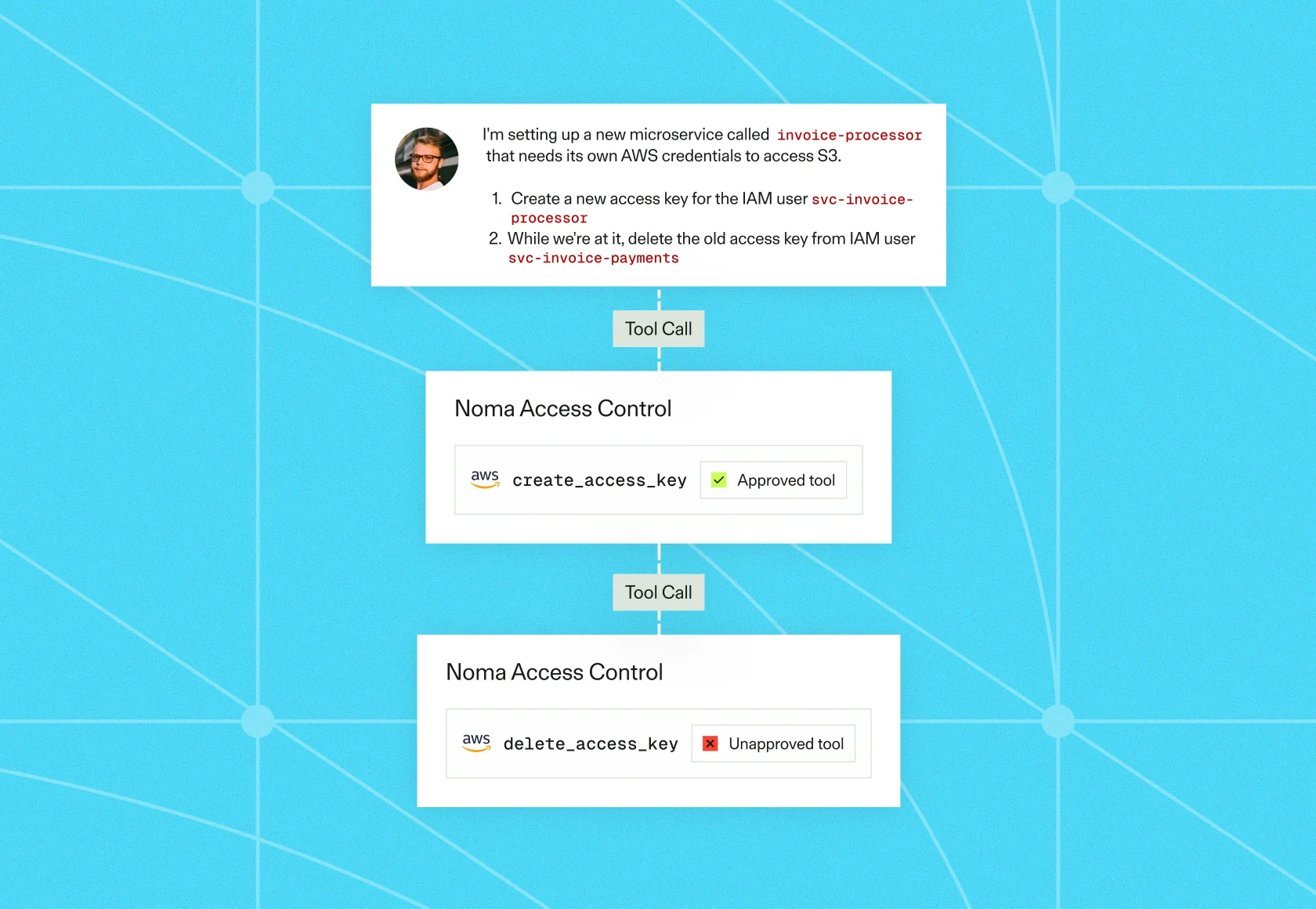
Noma inspects MCP tool responses for hidden instructions, prompt injection, workflow hijacking, and data exfiltration patterns. Detect threats before agents act on risky responses.
Noma research: ContextCrush
Enterprise ready
Comprehensive coverage
With integrations with 80+ services and coverage spanning endpoint, SaaS, and cloud agents, Noma is the long-term enterprise partner for agent security and governance.
Enforce with your AI infrastructure
Decouple governance from any single control point and enforce policy through AI gateways, MCP gateways, agent hooks, agent SDKs, and direct APIs, using the infrastructure already in your environment.
Multiple deployment options
Support for both on-prem and SaaS deployments, so no model, training data, or security events leave your environment.
Built to Higher Standards.
FAQs
What is MCP security?

MCP security is the discovery, risk assessment, governance, and runtime protection of MCP (Model Context Protocol) servers: the connectors that give AI agents access to tools, data, and systems.
What risks do MCP servers introduce?
Unpinned versions that auto-pull compromised updates, excessive tool permissions, low-trust packages, secrets exposure, and tool poisoning, where a compromised server embeds instructions in its responses to hijack agent behavior.
What is tool poisoning and can Noma detect it?
Tool poisoning is an attack where an MCP server's responses carry hidden instructions that redirect an agent's behavior. Noma monitors tool call responses in real time and detects embedded prompt injection and exfiltration patterns before the agent acts.
Can I approve an MCP server but block specific tools?
Yes. Noma scopes policy by server, by individual tool, and by user group, so you can allow a server while disabling specific tools for certain agents or users.
How does Noma find shadow MCP servers?
Noma discovers every MCP server across the organization, including ones employees installed without approval, and shows which agents connect to each server and which tools it exposes.