Blog 1.5 AI Agent Basics: Deployment and Architecture
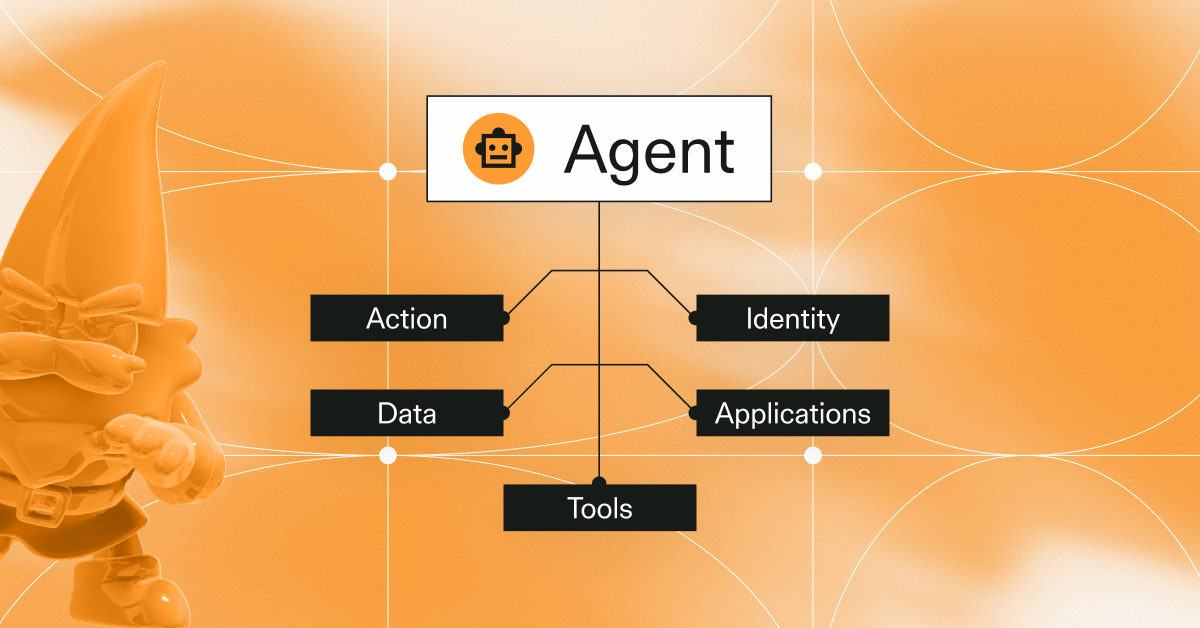
Deploying AI agents isn’t as simple as dropping a chatbot into production. These systems are not just responding with text; they’re reasoning, acting, and calling other systems. Without proper governance, agentic deployments can create new vulnerabilities and open the organization up to risk.
Basic Agentic Architectures
To understand how to deploy agents securely, we first need to understand the most common deployment patterns. Using the the OWSAP Gen AI Security Project – Securing Agentic Applications Guide as a foundation there are three major architectural patterns:
- Sequential or Single Agent Architecture – A straightforward design where a single agent handles a request from start to finish. Think of it like a conveyor belt: input goes in, the agent plans and executes, and output comes out. Simple, predictable, but limited in scope.
- Use cases often revolve around narrow, well-bounded tasks. For example, a travel booking agent that scans flights, picks the best match, and submits a reservation, or a customer support bot that answers common questions from a knowledge base.
- Risk implications are usually lower compared to more complex designs. Security conversations here focus on whether the agent is accessing the right data sets, validating inputs, and logging outputs. Blast radius from error can be contained to the agent’s domain of operation.
- Hierarchical or Multi-Agent Architectures – More complex workflows, where an orchestrator agent breaks a large task into smaller sub-tasks and delegates them to specialized sub-agents. For example, an orchestrator could break down a “prepare quarterly report” request into separate finance, HR, and compliance subtasks, with each agent owning its domain.
- Use cases fit situations where tasks can be broken into well-defined components but require different domain knowledge. A marketing orchestrator might spin up sub-agents for content creation, campaign analytics, and competitor tracking, pulling their work into a consolidated deliverable.
- Risk implications grow in two directions. First, orchestration errors can cascade. If the orchestrator misunderstands a request, every sub-agent may execute on a flawed plan. Second, each specialized agent introduces its own attack surface. A compromised finance agent feeding false data could contaminate the entire quarterly report. Governance conversations in this model must extend to ensuring that each sub-agent has bounded permissions and that orchestration logic is auditable.
- Swarm or Distributed Multi-Agent Architectures – A mesh of peer agents collaborating without a strict hierarchy. This is the most flexible but also the hardest to control. Imagine a swarm of analysts working together, each drawing on their own specialty, but without a single “boss” directing the flow.
- Use cases are complex tasks that benefit from a decentralized approach. These include supply chain optimization, traffic management, and cybersecurity. For example, a swarm of agents might scan multiple global cybersecurity feeds, share different analyses, identify a new threat, and then activate various agents to address the threat in different systems. Or a swarmed traffic flow for managing autonomous safety vehicles and traffic lights that make local, real-time decisions based on data from their surroundings.
- Risk implications are significant. Without central orchestration, it becomes harder to predict outcomes or contain errors. A single poisoned data point can be amplified through collaboration. Governance in this model requires strong monitoring, consensus validation, and often human-in-the-loop oversight to prevent emergent behaviors from spinning out of control.
Agentic Tool Frameworks
Enterprises are using three broad classes of frameworks to build and deploy agents. The first are low-code and no-code (LCNC) platforms such as Microsoft Copilot Studio, Salesforce Agentforce, and Google AgentSpace. These are tailored for business analysts and operations teams who want to spin up workflow-specific agents without deep programming. They make it possible for a sales leader to create a pipeline-tracking assistant or for a customer service manager to launch a support triage bot, all without waiting on IT. The second class are AI managed services and model platforms such as Google Vertex AI and Microsoft Azure Foundry. These are favored by data science and enterprise AI platform teams because they provide scalability, compliance features, and hooks into enterprise security, while allowing organizations to integrate custom models or fine-tuned domain models into their broader stack. Finally, developer-centric libraries and orchestration frameworks such as LangChain and CrewAI provide the scaffolding for engineers who need full control. These tools enable fine-grained orchestration of state, tool use, and API integration, making them the choice for advanced technical teams building multi-agent systems or deeply customized applications.
Across all these categories, the deployment decisions still hinge on classic design choices: which tools and APIs the agent may access, what execution environment it runs in, and how much autonomy it is granted. Those decisions shape not just the utility of the agent but the scale of the blast radius if something goes wrong. That’s why understanding the differences in who uses each framework, and for what purpose, is as important as the technical architecture itself.